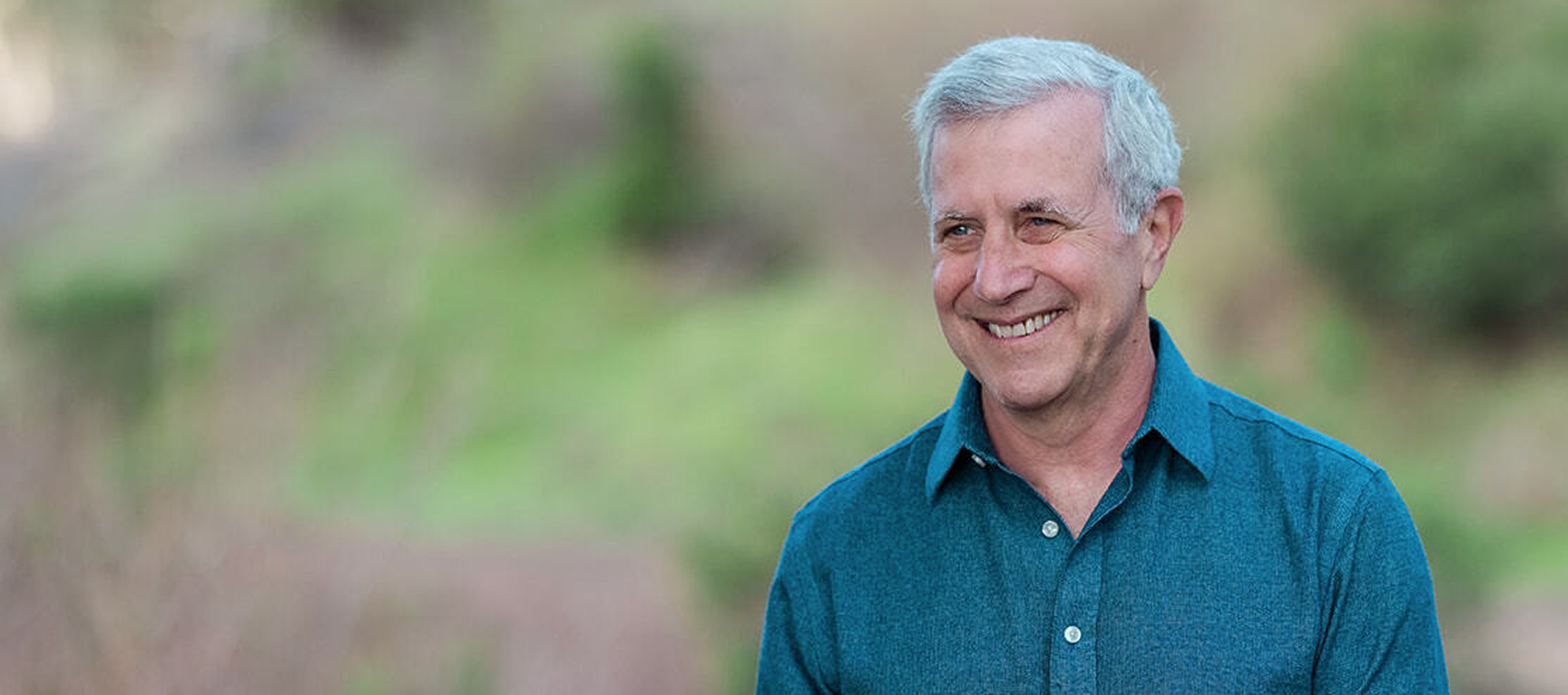
Howard I. Schwartz, PhD, (formerly Howard Eilberg-Schwartz) is an author, lapsed conservative rabbi and a former academic. His provocative writing is inspired by the unusual journey he has made in his life from seminary to Silicon Valley. Trained originally as a rabbi at the Jewish Theological Seminary of New York, he went on receive a PhD from Brown University in Jewish Studies, and spent a decade as a professor of religious studies. After leaving academia, he moved to the for-profit sector, where he has worked for more than ten years as an executive in the high tech software industry, for both startups and a public company. Concluding his career, Howard worked for a number of years helping to roll out a successful housing-first program in Marin County that permanently housed hundreds of individuals who were experiencing homeless.
As an academic, Schwartz taught religious studies for ten years at a number of institutions of higher learning (in order): Indiana, Temple, Stanford, and San Francisco State Univerities. In the discipline of religious studies, Schwartz is known for his thought-provoking interdisciplinary work that questioned standard scholarly conventions and helped shift the paradigms governing the study of Judaism towards anthropology and the themes of embodiment. His award winning The Savage in Judaism (Indiana University, 1986) has been long recognized as a trend setting work in biblical studies and ancient Judaism. In God’s Phallus and Other Problems for Men and Monotheism (Beacon), his widely cited work on the intersection of religion, gender and masculinity, Howard engaged feminist theorizing and cultural studies in understanding of biblical religious and theological symbolism.
Schwartz’s conflict with the Jewish community over his intellectual positions is part of the fascinating story of how and why he left academia and has been documented in an essay by Jonathan Mahler called “Howard’s End: Why A Leading Jewish Studies Scholar Gave Up His Academic Career” (Lingua Franca. March 1997:51-57). A more nuanced and thoughtful analytic analysis, which takes into account the tension between academic and religious communities, appeared as Chapter 9 in Who Owns Religion? Scholars and their Publics in the Late Twentienth Century, by Laurie Patton (University of Chicago Press, 2019). Patton thoughtfully looks at the inherent tensions between Howard’s academic work and the commitments of the Jewish community.
Inspired in his more recent works by both his religious studies and business background, Schwartz turned his interdisciplinary attention to one of the most evocative political concepts of our day, the idea of liberty. Concerned by the way liberty has been appropriated to justify conservative political views of individual rights and free markets, Schwartz questioned liberty’s meaning in the myths about America’s founding and its contemporary rhetorical use in recent political discussions.
In Liberty in America’s Founding Moment, Schwartz first takes on the view that we can get back to an earlier pure view of liberty in the American founding, by challenging the consensus that the Declaration of Independence, and its author Thomas Jefferson, wholeheartedly embraced the concept of self-evident and natural rights. And now, in his latest text, Beyond Liberty Alone, Schwartz draws on insights from history, philosophy and religion, to question the ways in which the now popular understanding of liberty is destructive to our moral selves and our planet, and to offer a progressive alternative. Motivated by his commitments to social justice and equality, Schwartz takes on the ideological orthodoxies that dominate our key political concepts, from individual rights, labor, and property to the role of government and free markets.
More recently, Schwartz has returned to his Jewish Studies and family roots, exploring his family history and uncovering the history of Mlynov, the small town (shtetl) his family hails from (today called Mlyniv, Ukraine). Tracking down descendants of families who once lived in this same small place, Howard pieced together the story of their collective experiences from old photographs, oral traditions and original source documents, which he published under the auspices of JewishGen. n addition to translating the Hebrew essays written in the Memorial (Yizkor) volume, Howard is now writing about the experience of discovering his own Jewish past and translating the diary of one of the town’s most famous residents, Yitzhak Lamdan.
Howard currently lives with his wife in the San Francisco Bay Area where he enjoys time with his family, hiking, and ongoing projects.